
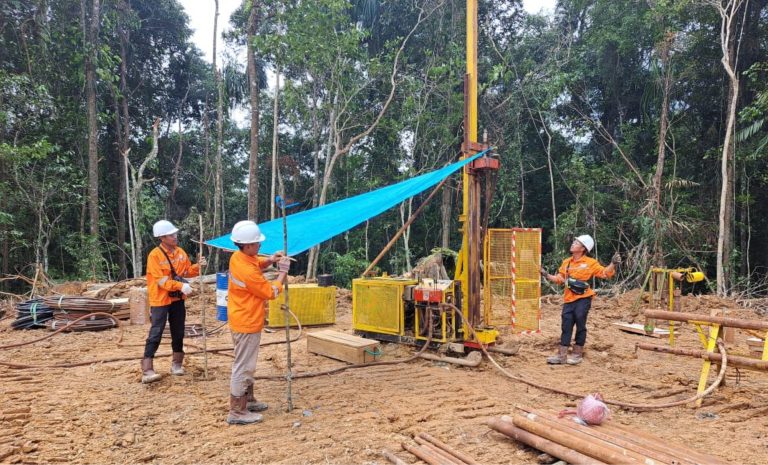
The Role of Drilling and Sampling in Site Investigation
Drilling and sampling are essential steps in every geotechnical site investigation. These processes provide direct information about the soil and rock beneath the surface. Because the ground controls the safety and stability of any structure, accurate subsurface data is critical. Therefore, drilling and sampling help engineers design foundations, assess risks, and plan construction activities with confidence.
Why Drilling Is Important in Site Investigation
Drilling allows engineers to reach different soil layers and understand how they change with depth. As a result, teams can identify weak zones, gravel layers, clay pockets, or shallow bedrock. These details are important because soil conditions are rarely uniform. Moreover, drilling helps confirm information obtained from geophysical surveys, ensuring that the final interpretation is accurate.
Several drilling techniques are used in site investigation, such as:
Rotary drilling
Auger drilling
Wash boring
Percussion drilling
Each method is selected based on soil type, project requirements, and depth of investigation. Consequently, engineers can choose the most efficient approach for each project.
The Purpose of Soil and Rock Sampling
Sampling provides physical examples of subsurface materials. With these samples, laboratory tests can determine important properties such as:
Moisture content
Density and compaction
Grain size distribution
Atterberg limits
Shear strength
Permeability
Soil classification
These properties help engineers understand how the soil will behave under load. Consequently, the data supports decisions for foundation type, slope stability, road design, and excavation safety.
Sampling is divided into two categories:
1. Disturbed Samples
Disturbed samples are used for identification and classification. For example, they are suitable for tests related to grain size, plasticity, or general soil behavior.
2. Undisturbed Samples
Undisturbed samples maintain the natural structure of the soil. Therefore, they are essential for strength, consolidation, and permeability tests. In particular, undisturbed samples are critical for high-risk or high-value projects.
How Drilling and Sampling Work Together
Drilling creates the access needed to collect samples from various depths. In addition, drilling logs record changes in soil texture, color, and consistency. Sampling then verifies these observations through laboratory testing. Because of this combined approach, engineers can produce accurate ground models and predict site performance under different conditions.
Furthermore, drilling and sampling help identify hazards such as:
Soft or compressible soil
Expansive clay
Cavities or voids
Shallow groundwater
Contaminated soil
Weak rock layers
Knowing these risks early, the project team can prepare appropriate mitigation strategies.
The Role of Drilling in Groundwater Monitoring
Groundwater is a major factor in construction planning. Drilling makes it possible to install piezometers or monitoring wells. As a result, engineers can measure groundwater depth, pressure, and seasonal fluctuations. This information supports drainage design, dewatering planning, and environmental protection.
Benefits of Drilling and Sampling for Construction Projects
The combination of drilling and sampling offers many benefits, including:
Better understanding of subsurface conditions
Reduced construction risks
Accurate foundation and structural design
More efficient planning and budgeting
Compliance with engineering standards
Early detection of hazards
Ultimately, drilling and sampling ensure that the project is built on safe and well-understood ground.
Drilling and sampling are key components of a successful site investigation. They provide accurate and reliable data that support safe engineering design and effective construction planning. By integrating drilling, sampling, and laboratory testing, engineers gain a complete understanding of the subsurface. Consequently, this leads to better decisions, fewer uncertainties, and stronger long-term performance for every structure.